

THE MAELSTROM
by Anne McPherson Arthurs
On a white-hot Saturday afternoon in late August, Lilly walks Carson down the street and around the corner to the cul-de-sac where a boy named Leon lives. Carson met this boy over Zoom in his kindergarten class, and the mother invited Carson to come play with him in person. They will be outside. Outside is safe. Children are safe, mostly.
The grass is bleached brown, sharp, and dry after weeks without rain. Sweat prickles against her temples and under her arms. She can smell her hot skin. Some of the houses have yards sporting flowers and bushes that look tired and faded, sagging with gravity, yet still, they blossom, fed by sprinklers every night. Lilly’s peapods have turned to brown, crinkled husks on the vine. She’s read that if you water them through the summer heat they will produce again in the fall. But the sound of water falling from her green plastic can—like rain rattling against dead leaves—makes it seem futile. The lettuce has sprouted in long, tall shoots, like bushy wedding cakes, and the leaves have turned bitter from heat. The spinach has turned triangular, like spades. Only the beans keep growing, their dark green pods shaded under leaves, spotted brown, but still supple. The tomatoes weigh their vines to the ground, round and full and whole if she gets to them before the squirrels, who bite small chunks into their red flesh, then drag them to the fence and abandon them when they can’t heft them over. The potatoes, safe underground, cradled in dry soil, produce purple flowers that will fade away and push their sugar to the spuds when the weather turns cool. This time of year she tries to remember the sharpness of winter, feeling warm only when wrapped in a thick blanket in front of the television with her slippers on. Everything feels tired now, worn down, as they wait for the next thing to happen. The wind kicks up a swirling cone of dust around them, and fine particles settle on her arms.
The house is not the same model as hers. She’s always curious about what people do with their own version of her house, what flooring they’ve chosen, and where they place their furniture if they’ve pulled down a wall. Do they have bushes or trees or flowers, laid out artfully, like hers? This is a split-level of brick and gray siding, with shaggy evergreen bushes that smell strongly of cat urine with weeds pushing through from underneath. Lilly allows herself to feel ever so slightly superior that they’ve done more with their own front yard.
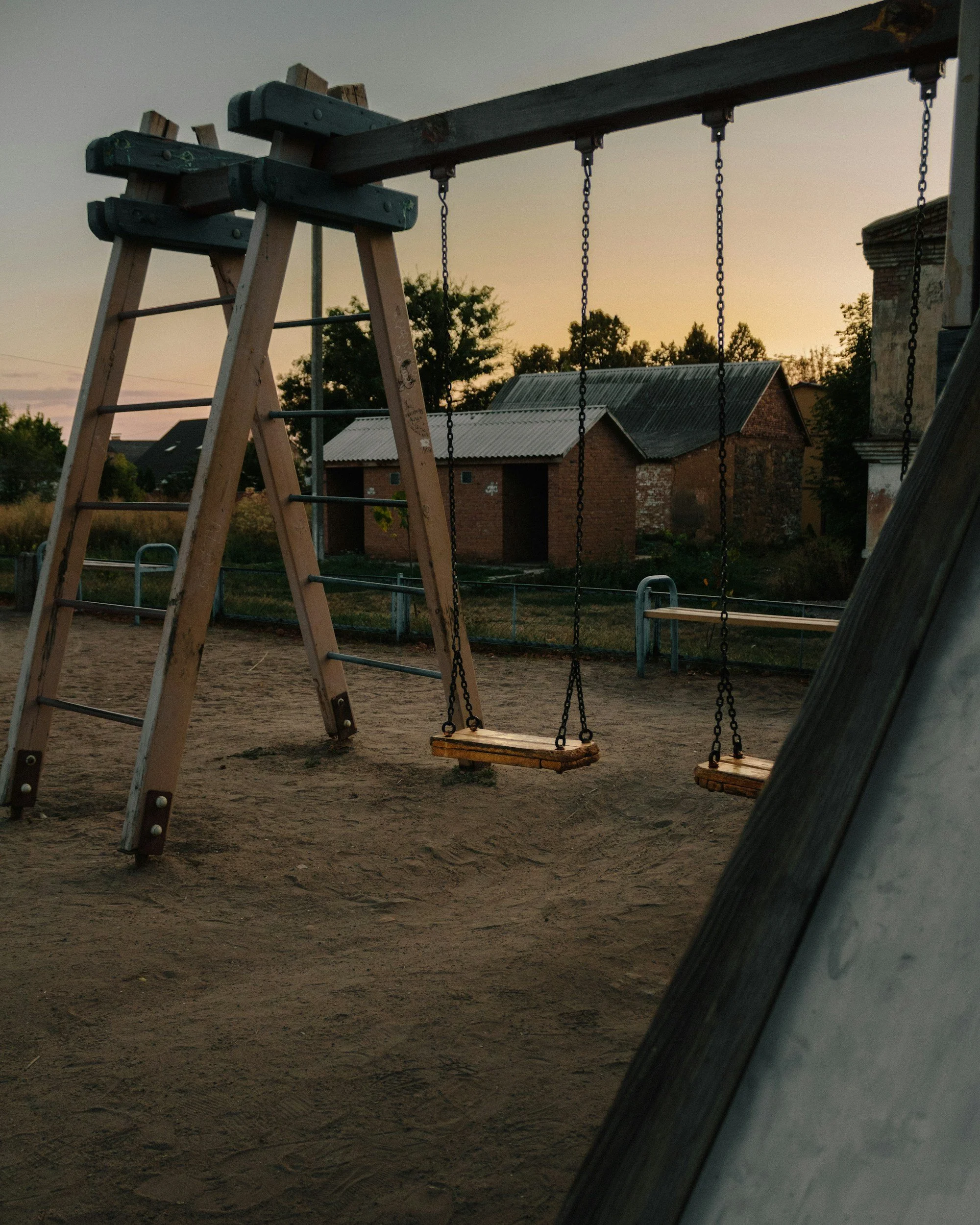
The mother greets them at the front door, maskless, and brings them around the side of the house to the backyard where Leon is playing on a wooden swing set. A younger sister runs around on pudgy legs in a pink sundress with yellow bows at the shoulders. Leon waves a greeting, and Carson runs to him without a backward glance. Lilly catches her breath at the normal happiness of it. She and the mother watch.
“How long have you lived here?” Lilly asks for something to say.
“Two years,” the woman answers. “We wanted Leon in a good school. I used to drive through here on the way to his daycare.”
Lilly nods. “We had a townhouse down the street. We needed more space when we had my younger daughter.”
The inane conversation feels surprisingly good, something ordinary.
Lilly goes on. “You’re so lucky he’s starting school now. At least there’s Zoom, thank God, so they can see each other and talk to each other. In the spring everything was through email. It was horrible. Carson could never have managed.”
This feels like a bit of a lie since he’s not managing that well now, but she wants to stay positive in earshot.
“I was so hoping the school would be open by now,” the mother says. “It’s too much.”
“I know. Online-only when they can’t even read yet?” Lilly says. “He’s constantly coming to me for help, and I’ve got three other kids at home, plus a full-time job.” She smiles sympathetically.
The woman stares at Lilly, her expression hollow, and Lilly notices how her clothes hang on her, a stained T-shirt and loose shorts like men’s boxers. Her hair is long and limp and slightly greasy. Then she smiles wanly, purple moons under her eyes.
“My daughter is three. I’ve been home with them both since daycare closed in the spring. I had trouble getting my work done on time, and I had to quit my job.”
“Oh,” says Lilly. She can’t remember this woman’s first name.
“I’d hoped school would open, and I could put my daughter back
in daycare and find a job, but now...” She shrugs.
“I see.” Lilly doesn’t know where to look. She’s afraid she’s staring and looks away. The boys stop swinging and jump off their seats.
“We’re behind on our mortgage payments. We might lose the house.”
“I’m sorry.”
Carson and Leon are chasing each other like puppies. The little girl attempts to keep up, trips and falls. Her hands and knees hit
the ground hard, and she bursts into tears. Her mother—is it Alice? Alyssa?—gives a little cry and rushes to pick her up and dust off her knees. She carries her into the house, still crying, and the screen door slams shut behind her. The boys are oblivious.
Lilly does not know what to do with herself. The boys are playing together nicely, swinging side by side in that perfect happiness only children who know they’re the center of everything can manage. She leaves Carson there because that was the agreement. She doesn’t know how not to feel guilty about it. She walks home in the heat, feeling off kilter as though the ground is tiling. She is whirling, she thinks, circling the center of something she can’t quite reach.