

SEVERANCE
by Anne McPherson Arthurs
The day of Paul’s high school graduation, we were both nursing sunburns. Paul forgot the sunblock when he went on his bike ride with Grandpa. His face was okay because he’d worn a hat, but his arms and his legs from thigh to the tops of his socks were flaming red. I hadn’t even worn a hat. And I’d put my heavy hair up because of the heat so the back of my neck itched in rebellion. I’d worn my swimsuit, but with a shirt over it, thank God. The tops of my feet burned between the sandal straps. We’d borrowed a canoe at Crab Orchard Lake and gone paddling around the shoreline, Mom steering from the back, Grandma paddling in front, me with nothing to do in the middle except lean over the side and run my fingers along the lily pads, pretending they were tiny legs leaping from one to the next, like Thumbelina.
I took a few pictures: the lily pads, a log near shore with a row of turtles sunning themselves, a dead tree tipped on its side with spiky branches fanning out like a mace, a tree leaning into the water with leaves brushing the surface like soft fingers, Mom in the back in sunglasses and a hat. I pointed the camera at Grandma as we drifted in the waves, the breeze washing over us as we followed motorboats in the distance.
“Are you having fun, Grandma?” I asked through the lens.
She turned and smiled at me, beneath her own hat and sunglasses. She raised one leg seductively and threw her arm above her head and twirled her hand. “Wheee!” she said, laughing, and I snapped the photo.
By that evening, Paul and I both feel prickly and hot, like we were running fevers, and realized our mistake. My whole body felt like I’d stood too close to an open flame. When Dad came home from work and saw us, he laughed at our stupidity.
“You both look like boiled lobsters!” he said. “Or angry tomatoes.”
Too late to do much beyond cold showers, their own unique misery, we went to bed, hot and swollen. I wanted to talk to Paul about what he’d said two days ago, his revelation still ringing in my ears, but I tired and hot and annoyed with Dad, and I let him slip away.
Paul had resisted going to his own graduation, but in a rare moment, Mom put her foot down. Her parents were coming to town and staying the week in the guest room. They were coming to see him walk across a stage, and they would not be disappointed. Chastened, Paul relented.
My grandparents arrived in their camper and since they were sleeping in the house, they let Paul and I sleep out there for fun, something we hadn’t done since we were little, visiting Mom’s childhood home in Detroit. Paul slept on the sofa that pulled out into a bed, and I slept on the folded-down table that became another. This was the kind of camping I liked to do. Paul would have preferred to sleep in the woods, with a fire, but I stubbornly insisted on nostalgia.
“Are you looking forward to tomorrow?” I asked as we lay there in the dark. He and Grandpa were planning on biking 18 miles out to Giant City Park and back. It would take all day. Since retiring a dozen or so years ago, Grandpa had taken up bike riding to keep active. He biked every day and had calves like tree trunks.
“Yes,” Paul said faintly, his mind elsewhere. He’d been like that all week. Neither of us spoke for a moment. I tried again.
“Mom and Grandma and I are going to canoe around the lake.”
“Mmmm,” Paul said.
“Dad will go to work, of course, because you know, why take time off just because you have family visiting?”
“They’re not his family.”
“…What?”
“I heard him say that once to Mom, when she said something to Dad about ‘our family’ and he thought she meant just us and his mother. He doesn’t consider Mom’s parents his family.”
“Well, that’s…I mean, that sound like Dad, right? Everything has a strict definition and if the rest of the world’s definition is different from his, everyone else is wrong.”
“It’s fucked up, is what it is,” he said heatedly. I winced in the dark.
“Well…” I agreed but didn’t see the point in getting so angry about what Dad believed. It wasn’t likely to change now just because it made no sense.
“I need to tell you something,” Paul said. “Well, no. I want to tell you something.”
“Okay…” I said.
“I’m moving out,” he said. The words stood on end for moment while they found purchase in my brain. “I found a studio apartment in town and a friend from work is going to help me move. I decided back in October when Dad told me how much of my own money he’d allowed me to spend. There was no point in arguing. Once he makes up his mind, he never changes it and Mom never backs me up. So fuck them.”
I flinched. I lay there for a moment, taking it all in.
“How are you going to get money out to pay a deposit if Dad’s keeping track of your account?”
I could feel him grinning in the dark.
“When I started at Waldenbooks, I opened a second bank account. I’ve been putting money in there every week since October. I paid the deposit and I have what I need to buy stuff for the apartment. Half my overtime pay from Christmas went in there. He has no idea how much I actually make.”
“When will you leave?” I asked.
“Right after graduation. I’ll wait until Grandma and Grandpa leave. No point in ruining their visit. Then when Mom and Dad are at work and you’re out riding the horse, my friend Tony will come with his truck and we’ll load everything up and I’ll be gone when they get home.”
He was pleased with himself, gleeful, and it was a little scary.
“When are you going to tell them where you are?”
“I’m not.”
“But isn’t that kind of mean?” I asked. “Won’t they be worried?”
“So?” Paul said. “All they have to do is call the store or drop by and they’ll see I’m fine. I just wanted you to know because I don’t blame you for any of this. You’re in this shit just as much as me. I’ll leave when you’re not around, so they won’t think you’re involved.”
I didn’t say anything. I thought it was a terrible thing to wound Mom and Dad on purpose. Even if Dad was being controlling, I didn’t think they deserved this. But I knew if I said so Paul would turn against me, too. Dad didn’t hold grudges, but Paul did. He could love you forever if you were a friend, but if you failed him, he would turn his back on you.
“I won’t tell anyone. Your secret is safe with me.”
Graduation took place on the SIU campus in the basketball arena, the only place in Carbondale large enough to hold all the students and their families. The gymnasium at the high school was too small, and the football stadium was too hot in June without shade. The ceremony took place on the gym floor with all the students lined up in folding chairs and the families watching from the lower rows of fold-down seats. The students walked across a raised stage when their names were called, received their blank folder, shook hands, moved their tassels over, paused for a picture, and were applauded by their peers based on their popularity. Mom and Grandma snapped pictures and we all clapped and cheered for Paul. I yelled the loudest to make up for the silence. When the ceremony was over, Paul spent several minutes on the floor, shaking hands and pounding the backs of his few friends, a solid group of misfits clumped together since elementary school: Tony, a short, round Asian kid with glasses and bad grades; Richard, whose clothes all came from the thrift store, and looked it, poor kid, and whose hair cut came out of the 1970s, a.k.a. Luke Skywalker; Roger, who was both monstrously tall and grossly overweight, and who’d grown his curly, frizzy hair out to his shoulders on top of everything else, like Weird Al.
After graduation, we had dinner at Murphy’s Bar and Grill on Walnut, crowded with other families doing the same. Grandpa was mostly quiet, enjoying his food while Grandma talked about the trip they planned to make in the camper on the way back, first down to Kentucky Lakes for some time by the water, then through some state parks in the hills of Ohio, all over on the east side bordering Pennsylvania, then north back to Detroit.
“One of these days we’d like to get up to Mackinaw,” Grandma said.
“Oh, I’ve heard it’s really pretty up there!” Mom said. “No cars are allowed, and you get everywhere by horse or bike.”
“Paul, sounds perfect for you since you can’t drive!” Dad said.
Paul looked at him but didn’t take the bait. He’d been like that for a while now, I realized, placid, Dad’s jokes rolling off him. I realized it was because he knew he only had to put up with it a little longer. He either said nothing or smiled. I found it unnerving, and I caught Mom watching him from time to time. There was no telling what Dad thought about it.
My grandparents observed all this without comment, Grandma too polite to say anything and Grandpa didn’t have much to say about anything unless you wanted to talk about tools. He was a solitary man who could build anything. He’d finished our basement himself when I was a toddler. Paul’s bike ride with Grandpa sounded like the perfect way to spend time with someone who didn’t talk much.
“Do you miss your painting when you’re away from home, Mother?” Mom asked. “Or do you find ways to work on it even while you’re away?”
Grandma had taken up oil painting seven years ago. She was remarkably good whereas I could barely even draw.
“I take pictures of things I think I can paint later,” Grandma said. “Or I sketch some idea I have in colored pencil.”
“I spend a lot of time standing around on trails waiting for her to finish so we can walk again,” Grandpa joked. Grandma smiled at him and laughed softly.
“Oh, speaking of pictures,” Grandma said, “I have a gift for the high school graduate.”
We’d all seen the box, of course, and were waiting for Grandma to present it to Paul. “Happy early birthday, too,” she said.
Paul smiled.
Grandma and Grandpa’s gift to Paul was a camera, a fairly expensive one, with a lens you could screw on and off.
“There are lots of different accessories you can get for this if you want them,” Grandma said.
“Wow! Thanks!” Paul said, staring through the lens and testing the zoom.
“I think I know where all Paul’s money will be going!” Dad said with a laugh. He looked at Mom. “We’d better get his first month’s rent now, don’t you think?”
Mom smiled faintly.
“Rent?” Grandpa asked.
“Paul isn’t going to college, you know, so we told him if he lives at home, he has to get a job and pay for room and board. No more free rides,” Dad said.
“Oh,” Grandpa said. “I never went to college. The army paid my room and board.”
“None of your mother’s siblings went to college and they’ve done all right,” Grandma said. “But times are different now. You want a job where you can use your brain, not one that keeps you on your feet all day and wears you out when you’re still young.”
It got quiet for a moment. Dad said nothing as someone else made his argument for him. Paul bit into his hamburger and chewed, expressionless.
“You’ll figure out your own way,” Grandma said at last. “You have lots of time for that. And you’re never too old to try something new. If you take any really good pictures, send them to me, okay? Maybe I can paint them.”
“I will,” Paul said.
“I’d like to say something,” Dad said. I braced myself, but Paul only looked amused. He was shielded against anything now. It couldn’t touch him.
“I just wanted to say, I’m proud of you.” Dad looked around the table, smiling. Mom and my grandparents all nodded in agreement. Paul stared, mouth slightly open, and then he snapped it closed. Had he wanted a confrontation tonight, I wondered? Did he have a speech prepared?
“I know school has been a struggle this year. I know it’s always been a struggle, but this year was especially rough. I know we’ve disagreed far more times than we’ve agreed but I hope you know that your mother and I have always been on your side and always will be. We’ve always pushed you to be the best you can be. I hope this next year will bring new opportunities for you and lead you to the best decision for your future.”
“Hurrah!” Grandpa said and we all laughed. One by one we raised our glasses.
“To Paul!”
Paul continued to sit silently, mulling over Dad’s speech, probing it for guile, but he had to know Dad was too direct for double meaning. Paul would have no choice but to believe he meant what he said. I knew it would not change Paul’s mind. Dad clearly thought there was only one right decision for Paul to make about his future. But I thought leaving would be the best thing for him now. Years of mutual animosity could only be healed by time and a healthy distance. But I hoped it would change the way he left, that he wouldn’t slip away with no notice.
I looked over at Mom. She was watching Paul, her eyes shining.
The day after graduation, Mom suggested we all go out to Giant City Park and hike around in the morning before it got too hot. Dad didn’t go, of course. He was preparing for his summer classes. We headed out at nine, taking two cars for the six of us, skirting town and taking Giant City Road past green corn fields and small ranch houses and lots of green thick trees and underbrush. One house sported a massive stone fence, crumbling beneath an army of overgrowth, and another stood tall with several tiny lakes surrounding it like a moat. When we hit the border of the park, tall trees lined the sides of the blacktop like a natural cathedral. We passed the trail-riding stables, where I’d learned to ride all those summers I spent at Camp Cedar Point.
When we came to the shelters and playgrounds, we followed the road as it curved around the different sites and pulled off near one of the trail heads, an easy one for the sake of my grandparents. For years and years my dad’s department held picnics every year at one of those shelters, with grills and fire pits, shaded picnic benches, outhouses and swing sets nearby. All the faculty would come with their wives—the professors were always men—and their kids, and that year’s PhD students. The kids would all be friends for the day, grouping together for games we made up, or to play horseshoes or bean bag toss, to cool our feet in the stream and look for minnows and craw dads, to search for the perfect rock worn smooth and round by water. We’d stuff ourselves with as many chips and cookies as we could without our parents noticing, pulling soda after soda from the coolers. Someone always brought a few kegs. That was the first place I tasted beer. It was disgusting, like something between what urine and skunk smelled like, and I was never interested in trying it again. The picnics stopped a few years ago. First people started hosting them at their houses, which drew less people with kids who had nowhere to play, and then they quit altogether. The professors got older, the kids got older, and no one could be bothered anymore.
We all walked up the steep incline in our tennis shoes. In the shade the heat wasn’t so bad, and it was easier to breathe. The trail was wide and trimmed of brush; you could see trees chopeed into sections sitting off to the side. At the top of the hill, a wall of thick, grey limestone spotted with blooms of lichen rose 25 feet above our heads. Southern Illinois marks the very edge of the glacier’s reach during the last ice age. While most of the state is scraped flat to the horizon, Southern Illinois has hills and beauty and topsoil stolen from the north. Giant City Park was filled with massive boulders and blocks of limestone, and this trail formed a circle around several. There were either steps or a wooden walkway. You didn’t have to climb if you didn’t want to, but Paul liked to scramble up the smaller boulders and stand on top.
“I claim this rock for Clan MacKenzie!” he declared. I climbed up beside him and put my hands on my hips.
We walked around to the other side of a massive wall of limestone, moss, ferns and lichen growing off the sides and skinny tress sprouting from the top like a miniature forest. We passed through the split between two walls, rising up like the sides of a ruined cathedral missing its roof. Here, people had scratched their names and the year they visited along the surface. If you searched, you could see the earliest from the 1930’s.
“These are from the men who broke these trails during the Depression,” Mom told my grandparents, pointing out the earliest carvings. “They were working for the CCC. They also built the lodge where we’re going to have lunch.”
Paul and I pushed on ahead, but Mom walked slowly with her parents, looking at the landscape and pausing while Grandma took pictures of the trees, a close-up of a limestone wall dotted with moss and lichen, a fern in shadow.
Paul and I tried to outdo each other, climbing up the rocks to the very top of the largest slab. It was height without a vantage point though. The foliage was too thick to see anything at a distance. Climbing back down we were hot and sweaty and ready to eat in air-conditioning. We circled the limestone and descended the trail, passing under a huge bolder balanced between two walls. We stopped for a few minutes to cool our feet in the stream before getting back into the cars and continuing on to the lodge, an impressive dark wood and stone building. In the dark lobby stood a stuffed buffalo, and another massive buffalo head hung over a fireplace.
Around the side was the restaurant, a large bright room with walls of windows. My parents brought us here for special occasions when we were kids: Dad getting tenue, Mom getting the job in the Dean’s office, Paul turning 13. They had the kind of family meals few other places in Carbondale really had at the time: soup and sandwiches, roast beef, steak, fried chicken. When lunch arrived, we all toasted Paul’s graduation again, and I felt guilty about how relaxed the meal was without Dad.
After lunch, we walked across the parking lot to the shady patch where we’d left the cars, and Paul said, “Let’s climb the water tower!”
I groaned inwardly. The water tower had three steel supports, bending together to hold up a perfectly round sphere with stairs winding up to an observation platform. It looked like Buck Rogers’ spaceship. I hated that water tower. I was afraid of heights and Paul knew it, and yet he always wanted to climb it. Mom and Grandma declined. They wanted to walk over to the other side of the lodge and read the plaque commemorating the CCC. Grandpa agreed to go with us. Paul bound for the stairs, Grandpa behind him, and Paul was already far ahead of me before I put my foot on the first step. I began to climb, gripping the railing with my right hand, bracing myself against the metal, but as I climbed, I looked down and saw the empty air between the stairs, and between the woven iron on each step, and I began to shake. Grandpa sensed something and turned around to look at me.
“You okay?”
“…No.”
He came down and grabbed my hand.
“Come on, we’ll go together. Look up. Only up.”
He held my hand and we climbed, slowly, side by side. At the top Paul stood with his elbows resting against the railing, staring out at a rolling sea of green trees, dark and light blurring together in the distance. The canopy stretched for miles. I stood with Grandpa looking out over the trees. Up here, the height didn’t bother me, on a solid floor where I couldn’t see air beneath my feet. I felt like I could see to the very curve of the earth.
“It’s pretty remarkable,” Grandpa said. “I’ve been to lots of places. I’ve seen lots of views like this, from way up high. And still, you can only see a little bit at a time.” He looked over at me. “There’s so much out there to see. Don’t be frightened of it.”
Paul moved over to me, grabbed my shoulders from behind and shook me very softly.
“Ahhhhh!” he said, whisper-yelling. “We’re up so high! Oh, nooooooooo!”
I laughed and turned around and pretended to punch him. “Jerk.”
And then we had to leave so Paul could go home and get ready for work. He’d asked for full-time hours now that school had finished, saving his money to pay for rent and food. He was in such a good mood. Nothing could stop the momentum. Looking out over his future, there was nothing to block his view, nothing to be frightened of.
***
Two days later, my grandparents hooked their camper to their van, hugged everyone—except Dad who’d already shaken hands earlier and left for work—and pulled out of our driveway, heading left up Reed Station Road towards the Highway 13. Paul stood in the driveway straddling his bike, ready to head to McDonald’s for breakfast and then to the University Mall for work. I stood next to Mom’s car in an old t-shirt and riding breaches. Mom was dropping me at La Cheval before going to her office. She went back inside to grab her lunch and purse from the kitchen counter. I walked down the asphalt and stood next to my brother. Together we looked down the road where the camper had disappeared. I leaned into him.
“Please don’t go,” I said softly.
He said nothing but his arm came around my middle and drew me to him. He rubbed my arm. I rested my head against his shoulder.
The kitchen door slammed as Mom stepped into the garage. Paul released me and pushed off on his bike, peddling steadily, then speeding up to climb the hill. I walked back down the driveway and slid into the passenger seat beside Mom.
“What was that about?” she asked.
“Nothing,” I said. “I was just telling Paul I love him.”
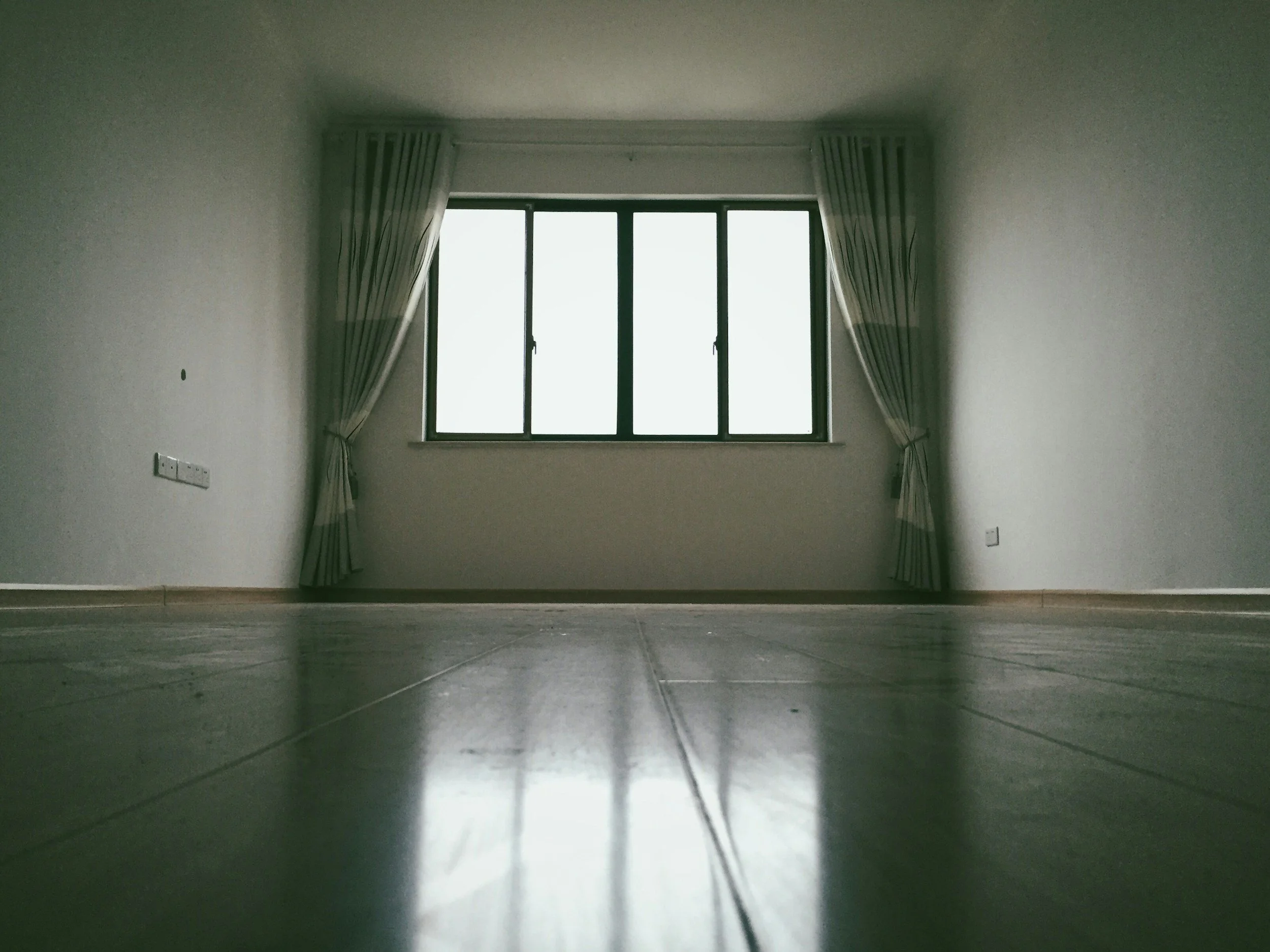
I tried not to be the one who discovered Paul gone. When Mom and I came home mid-afternoon, I went directly to my room to pick out clean clothes and then immediately took a shower. When I came out, Mom was standing in his empty room, staring at all the nothing. He’d left behind only a patch of rectangular dust in the corner beneath the vanished bed. He’d left the curtains open so you could see the emptiness. He’d hidden nothing. She looked at me.
“Do you know where he’s gone?” she asked.
“No,” I said truthfully.
“I thought maybe this morning…”
“I don’t know where he’s gone,” I said. “But you can go to Waldenbooks and ask him.”
She studied me for a moment and I silently begged her not to ask a question I’d have to lie to answer.
“Yes, of course,” she said. “I’ll call your dad now, so he can yell there instead of here.”
I heard the low rumbling of her voice behind the door of her bedroom. I stood in Paul’s room, which felt so much bigger now with all the shadows gone. It still smelled of him—unwashed teenage boy funk and indignation—but fainter now, as the odors slowly released.